




23 November 2026
Latest News
The Australian Childcare Alliance (ACA) has called for a more tailored approach to early childhood education and care (ECEC) policy, funding and workforce planning to better support services and families in rural, regional and remote Australia.
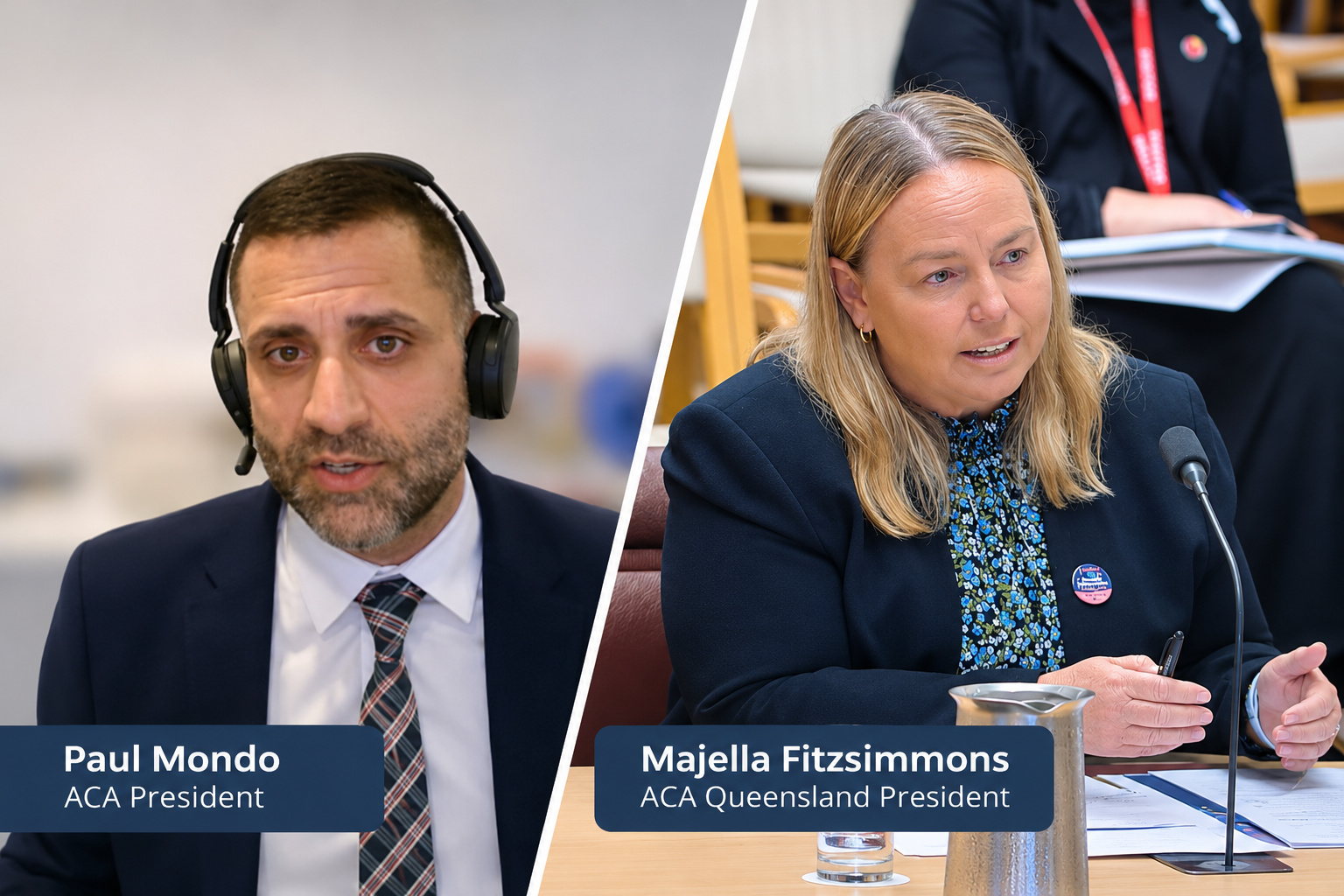
ACA President Paul Mondo and ACA Queensland President Majella Fitzsimmons appeared before the Senate Education and Employment References Committee on 20 November 2026, providing evidence on the challenges facing early learning services outside Australia's major cities.
Representing more than 2,500 independently owned and operated providers across Australia, ACA emphasised that a one-size-fits-all approach to policy and regulation fails to recognise the very different circumstances in which early learning services operate.
Recognising the diversity of early learning services
During his opening statement, Paul emphasised the essential role independently operated early learning services play in providing families with access, diversity and choice, particularly in communities where they may be the only provider.
While reaffirming ACA's strong support for child safety reforms and consistent standards across the sector, Paul highlighted the different circumstances in which early learning services operate.
"Standards must be the same everywhere, but the capacity to meet them is not," Paul told the Committee.
He called for a more considered approach to regulatory reform that recognises these differences, ensuring that services have the practical support and resources needed to meet their obligations, regardless of their size or location.
Protecting the viability of regional services
Paul also raised serious concerns about the growing number of early learning service closures and the implications for children, families, educators and local communities.
Figures drawn from ACECQA data show that 204 centre-based day care services closed in the year to 30 June 2026, compared with 149 the previous year and 90 the year before that.
A further 72 services closed in July and August 2026 alone, including 53 rated Meeting or Exceeding the National Quality Standard.
For independently owned services, closure can mean losing a business built over many years, often a family's livelihood and financial security. In rural and remote communities, the consequences can be particularly devastating when no alternative early learning service is available.
Paul cited Kids House in Heyfield, Victoria, the town's only early learning provider, which has relied on the Community Child Care Fund (CCCF) since 2017 but was unsuccessful in its application for additional funding.
ACA called for a review of the CCCF's funding adequacy, indexation, and duration, along with recurrent funding support that recognises the higher costs of delivering early learning in rural and remote communities.
Inadequate funding to support children with additional needs
ACA also raised concerns about the inadequacy of funding under the Inclusion Support Program (ISP), drawing the Committee's attention to the underfunding of the program for nearly 10 years, and hasn’t been indexed to grow year on year.
This places additional financial pressure on service providers seeking to support the meaningful inclusion of children with additional needs, particularly in rural, regional and remote communities where access to specialist support is already limited.
Addressing critical workforce shortages
Workforce shortages were another central focus of ACA's evidence.
He explained that in many cases, the physical capacity to accommodate more children already exists, but services cannot open additional rooms without qualified educators.
"Regional Australia is not short of children. It is short of educators," Paul told the Committee.
ACA called for a dedicated ECEC Industry Labour Agreement to enable rural, regional and remote providers to recruit qualified overseas educators where local recruitment cannot meet demand, complementing existing domestic training pathways.
The ACA submission also recommended financial incentives for educators working in regional and remote communities, such as relocation grants, salary supplements and housing assistance, along with greater recognition of early childhood educators as key workers in regional housing schemes.
The realities facing remote families
Majella shared firsthand examples of the challenges facing families and providers in remote Queensland communities.
In Weipa, parents have resorted to using group chats to find out whether a childcare place might become available when another child is absent.
She also described the challenges associated with relying on fly-in, fly-out educators, including the financial costs and disruption to continuity of care.
These experiences reinforce the need for locally responsive solutions that recognise the distinct circumstances of remote communities and the importance of a stable, qualified early learning workforce.
Advocating for practical, lasting solutions
ACA's evidence to the Senate Inquiry reinforced three key priorities:
- Policy and regulation that recognise the diversity of early learning services, while maintaining consistent standards of quality and child safety.
- Sustainable, predictable funding arrangements that support the ongoing viability of services, particularly in communities where alternatives are limited.
- Targeted workforce strategies that address recruitment, retention and housing challenges in rural, regional and remote areas.
Through its participation in the Senate Inquiry, ACA continues to advocate for practical, evidence-based reforms that recognise the unique circumstances of rural, regional and remote communities, protect the viability of existing services and ensure that every child has access to high-quality early learning, regardless of where they live.
Watch the replay
You can watch ACA President Paul Mondo and ACA Queensland President Majella Fitzsimmons present evidence to the Senate Inquiry here. (ACA's appearance begins at approximately 1 hour, 1 minute and 30 seconds into the recording.)
Read ACA's submission
You can read ACA's submission to the Senate Inquiry for further insights into the challenges facing rural, regional and remote early learning services and ACA's recommendations for addressing them.